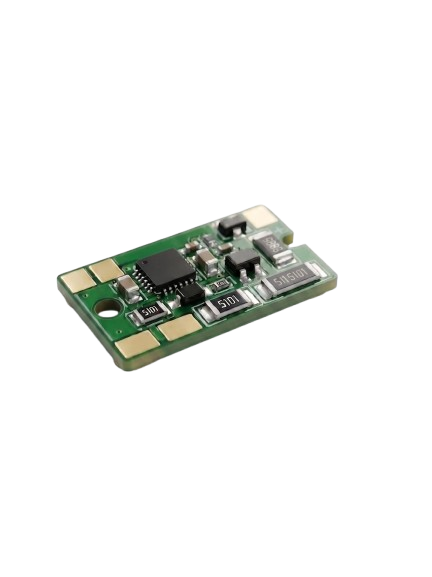
One Sensor Turns a Module Into a Measured Device.
Everything on this page — three variants, two integration paths, rapid shutdown — is the same measurement engine in a different housing. Understand it once and the rest is just deployment.
Voltage and temperature, measured where they actually happen — at the module, not at the string or the inverter.
Not a snapshot from an annual inspection. A living curve for every single module, for the lifetime of the plant.
Patented Power Line Communication sends the data home over the DC cables that are already there.
Every unit individually calibrated and paired to a serial number. A measurement you can put in a report.
One Sensor Is a Measurement. Ten Thousand Are the Truth About Your Plant.
A string reading tells you a string is underperforming. It cannot tell you which module, why, or whether it is getting worse. Put a sensor in every module and the plant stops being a black box: every loss has an address, a cause and a date.
Three deployments. The answer is your project, not a spec sheet.
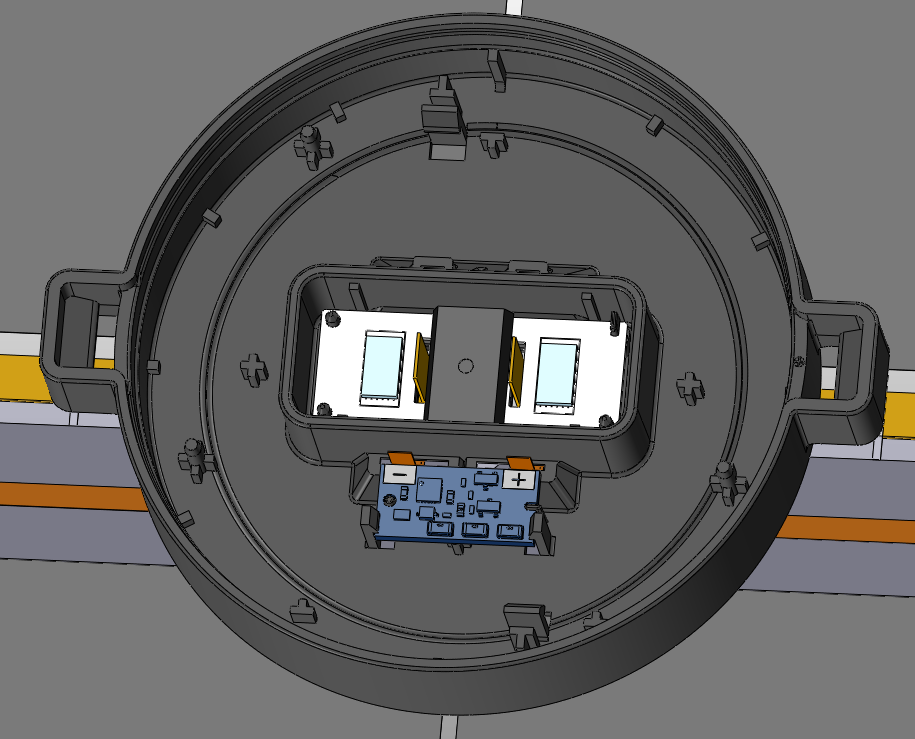
The sensor is built into the junction box at the factory — Sensor accuracy: 99%. The installer does nothing extra.
Read onBond a frame, clip the sensor in. Reference accuracy: 99.9% on plants that already exist.
Read onNEC 690.12 compliance and full monitoring from one box — factory-integrated or as a retrofit.
Read onBuilt Into the Module. Invisible to the Installer.
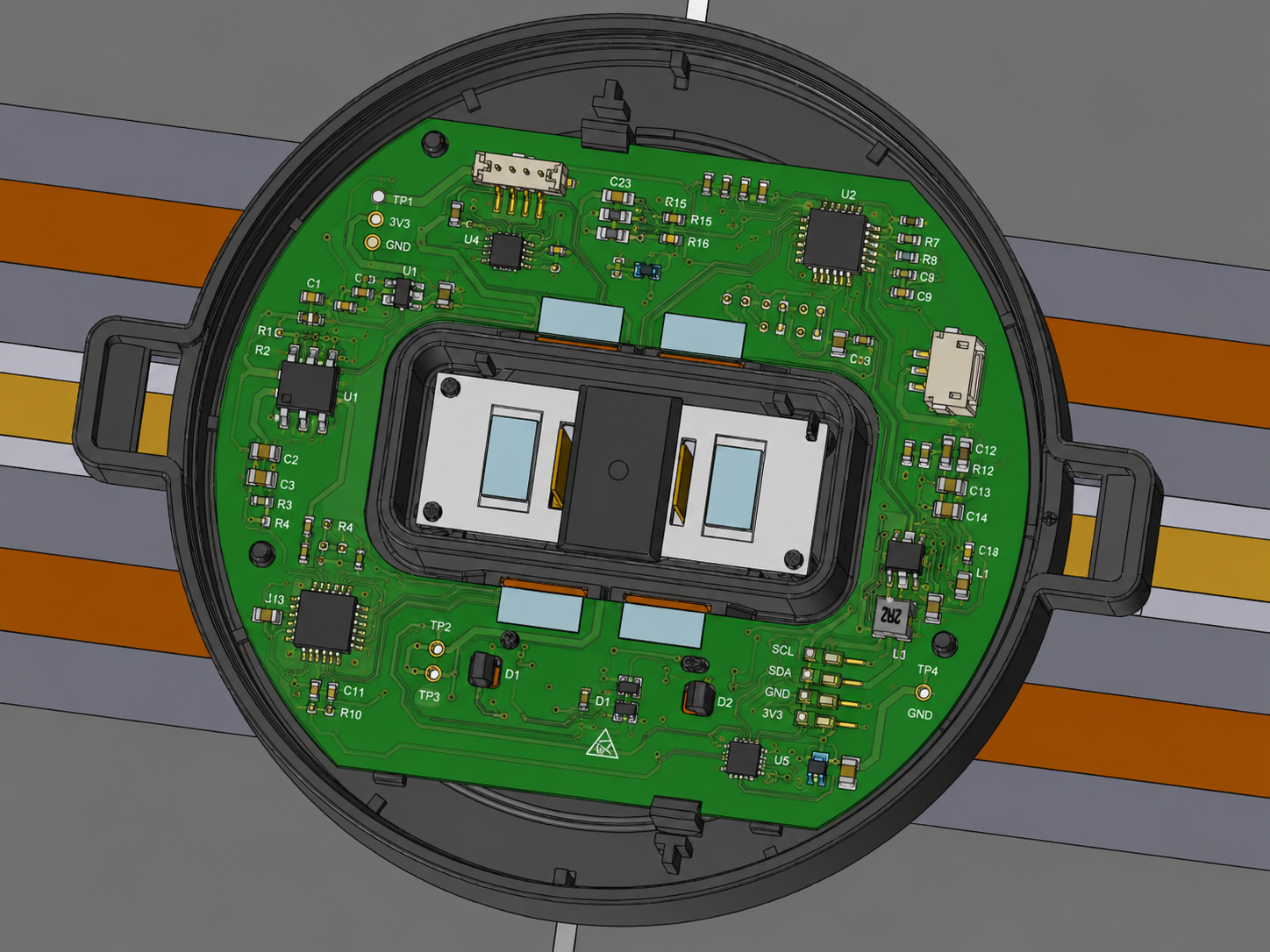
If the modules have not been built yet, this is the cheapest monitoring you will ever install: the sensor goes in at the factory — the module itself needs no extra part, no extra step and no extra cable on site.
For Plants That Already Exist. Reference accuracy: 99.9%.
You cannot go back and change how a module was built — but you can still measure it. Every Grade A+ unit is individually calibrated — Reference accuracy: 99.9%. It is the high-precision comparison point within the monitored retrofit area, which is why it is also the sensor in the 120-module pilot kit.
Where Shutdown Is Mandatory, Monitoring Comes Free.
Under NEC 690.12, rapid shutdown is not a feature you choose — it is hardware you must buy. Most RSD boxes only shut down. This one does both: compliant shutdown and full Grade A monitoring, from the same electronics you were already paying for. And it exists in both worlds — factory-integrated for new modules, retrofit for everything else: plants already standing, and new installations built with regular solar modules, which is by far the more common case.
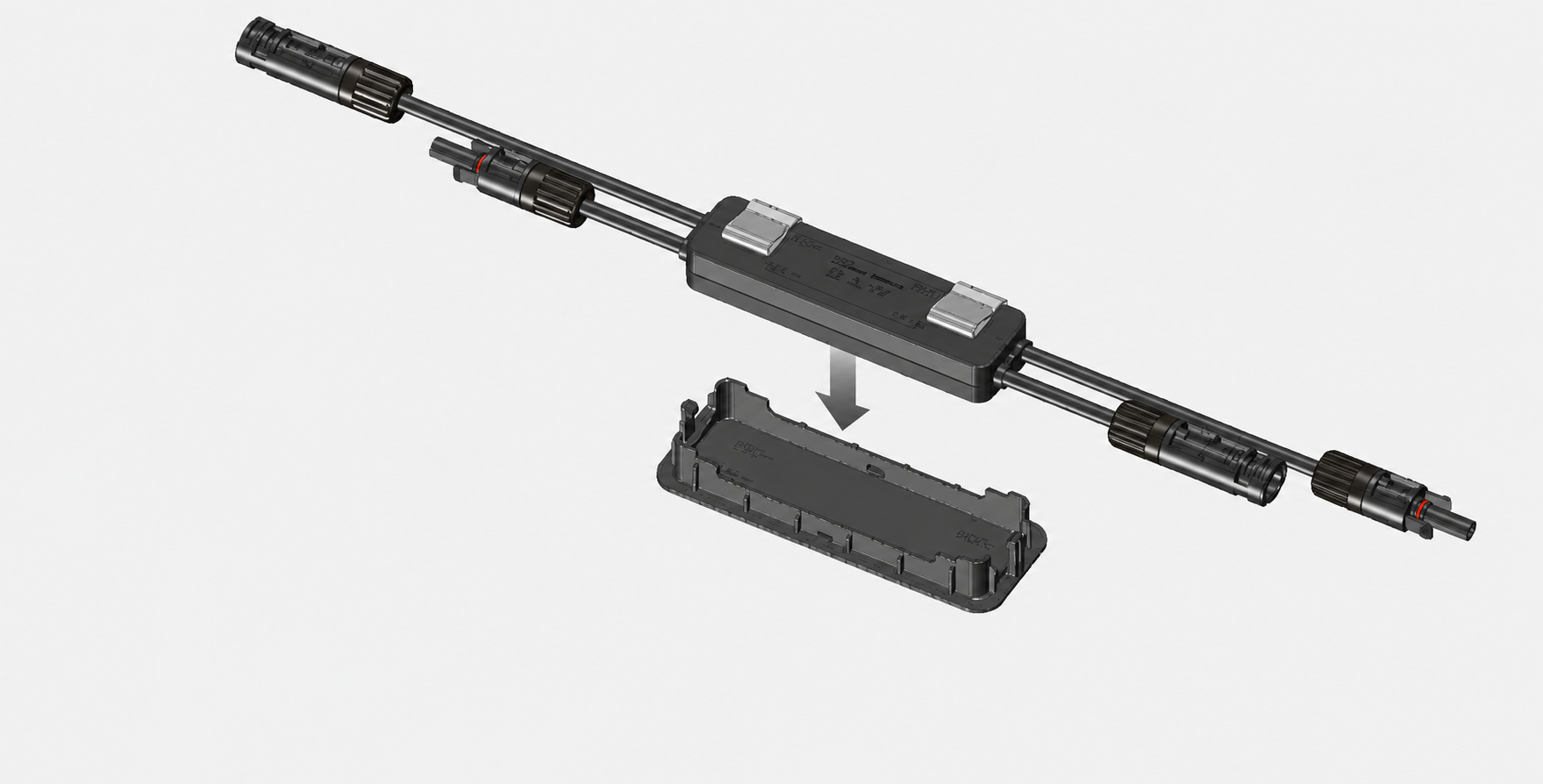
 RSDQC Solar · RSD variant
Built in at the factory, or retrofitted on site.
RSD is not only a manufacturer product — and in practice, the retrofit route is the more common one: most installations are built with regular solar modules, and plants already standing need to comply too. The retrofit version uses exactly the same box as the Grade A+ retrofit sensor, so installers work with hardware and a procedure they already know — Sensor accuracy: 99%; Reference accuracy: 99.9% remains exclusive to Grade A+.
The RSD electronics go into the QC Solar junction box on the line — the module ships NEC-compliant and already measuring. Nothing for the installer to add.
The same box as the Grade A+ retrofit sensor: bond the frame, clip it in, no tools. Works on plants already standing and on new installations built with regular solar modules — code-compliant and monitored in one pass.
HelioVolta's March 2026 field study of 500+ commercial rooftop systems counts 74 RSD-related safety incidents since 2021, 21 of them fires. Its diagnosis: external boxes multiply connector pairs two- to three-fold — a four-module string segment goes from 5 connector pairs to 11, or 19 with jumpers — and systems with module-level electronics show 34% more major connector issues. Integrated in the junction box, the RSD adds none of that: factory-made connections only, on hardware the module already has.
And for plants that already carry RSDs, the report's own O&M advice is to remotely watch for voltage imbalances (Voc, Vmpp) and alert on them — which is precisely what Grade A monitoring does natively, per module, every 15 seconds.
Industry-standard signalling, for interoperability with existing SunSpec RSD ecosystems.
Our own, more robust shutdown signal — and free of the licensing questions that surround SunSpec-compatible implementations.
Both run on the same electronics. The signal is a configuration choice, not a hardware decision.
Three Housings. One Measurement.
The data these three produce is the same data. What differs is how the sensor gets onto the module — and, in one case, how precisely it is calibrated.
Building the modules yourself? There are two ways to integrate the sensor.
Today's standard module carries a split junction box. The sensor needs a connection between + and − to measure module voltage — either path uses a dedicated junction box: in the middle with an additional busbar on the glass, or in the outer position with an additional cable from the outer boxes.
See both integration pathsNothing on the backside. Needs a dedicated junction box and an additional busbar on the glass.
No busbar, no change to the glass. Uses a dedicated junction box plus an additional cable from the outer boxes.
The Right Sensor for Your Project.
Grade A for new plants. Grade A+ for retrofits and reference measurements. RSD for NEC markets. One measurement engine, one analytics platform, one truth about your plant.